
Blog — Page 11
Insights on internet governance, digital policy and education from the LARUS Foundation.
Understanding Big Data: The 5 Vs of Big Data
We are all surrounded by vast amounts of data. From social media interactions to shopping habits and even health tracking, data is being generated at an unprecedented rate. However, not all data is created equal. Big Data is a term that has transformed industries and the way we understand informa...
Who is a Data Analyst? A Student’s Guide to Data Analytics
In a world overflowing with data, organizations rely on professionals to make sense of it all. Enter the data analyst—a key player in extracting insights from raw data to help businesses make informed decisions. If you’re a student exploring this field, this guide covers everything from a data an...
Who is a Data Scientist? A Student’s Guide to Data Science
In a data-driven economy, the term "Data Scientist" has become popular. But who exactly is a data scientist? Why are they so important in organizations? If you’re a high school student curious about this high-income career field, you’ve come to the right place. This guide will walk you through ev...
Where Are Your Social Media Photos, Videos, and Files Stored? Example of Everyday Cloud storage Use
Every time you post a photo on Instagram, share a video on Facebook, or upload content to platforms like TikTok, Twitter, and WeChat, you’re using cloud storage. But what exactly does that mean, and where are your files actually stored? Here’s an overview to help you understand how cloud storage ...
Registry, Registrar, Registrant: What is the difference?
When setting up a website, you may encounter three roles in the domain ecosystem: registry, registrar, and registrant. Although these terms sound similar, each plays a unique part in managing domain names and ensuring that the Internet functions smoothly. Here’s a breakdown of what each one does ...
From Physical to Virtual: The Rise of Cloud Servers
Businesses are increasingly turning to cloud servers to meet their computing needs. From hosting websites, managing applications, or storing data, cloud servers offer flexibility, scalability, and cost-efficiency that traditional physical servers often can't match. But what exactly are cloud serv...
Disaster Recovery and Backup Solutions in IT Infrastructure: Ensuring Business Continuity
In today's increasingly digital world, businesses rely heavily on IT infrastructure to manage operations, store data, and deliver services. However, unexpected disasters—whether they are natural events like hurricanes or earthquakes, cyberattacks, or hardware failures—can disrupt this infrastruct...
Understanding Cloud Services: A Beginner's Guide
You may have heard terms like "cloud services", "cloud storage" or "cloud server" thrown around, but what exactly is "the cloud"? Don’t worry if it sounds confusing—this guide will break it down in simple terms.What Is "The Cloud"?At its core, the cloud is just a fancy way of saying "online." Ins...
CPU vs GPU: Learn the Differences and Their Roles in Computing
The terms CPU and GPU are often thrown around when discussing computing power, performance, and specialized applications. While both are vital components of modern computers, they serve different purposes and are optimized for distinct types of tasks. In this article, we’ll break down the key dif...
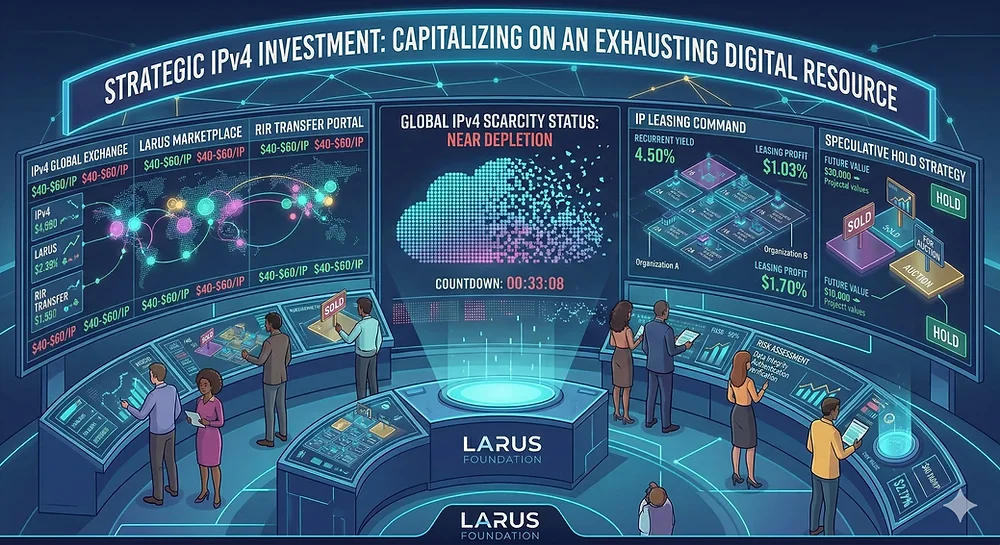
Investing in IPv4: Capitalizing on a Scarce Digital Resource
Individuals and organizations are increasingly investing in and monetizing the IP address sector, particularly as IPv4 addresses become a scarce resource. With the growing demand for IPv4 addresses, these assets are now viewed as valuable commodities, leading to the emergence of a market for inve...
IPv4 Addresses: A Scarce Resource
IPv4 (Internet Protocol version 4) is the fourth version of the Internet Protocol (IP), which is the fundamental communication protocol used to identify devices and route traffic across networks, including the Internet. IPv4 uses a 32-bit address scheme, allowing for approximately 4.3 billion uni...
Understanding Romance Scams - Larus.foundation
Romance scams are fraudulent schemes where scammers exploit individuals' emotions by pretending to form a romantic relationship online. Typically, scammers create fake profiles on dating apps or social media platforms, often using stolen photos and fictitious stories to appear genuine. Over time,...