
Blog
Insights on internet governance, digital policy and education from the LARUS Foundation.

Protect IPv4 Assets from Governance & Registry Risks
As IPv4 scarcity intensifies, enterprises must secure ip assets against governance gaps, registry risk, and legal uncertainty in global IP address systems.Key points • Weak IP address governance and limited RIR authority expose ipv4 assest holders to legal, operational and financial risk. • Str...

What Happens If an RIR Stops Operating? - LARUS.foundation
If a regional internet registry fails, the consequences go far beyond IP governance. Trust erodes, and the systems that keep global routing and address allocation stable could quickly become vulnerable. • If the regional internet registry system starts to come apart, IP address governance becomes...
Why Decentralisation Enhances System Survivability - Larus.foundation
Decentralised systems reduce single points of failure, improve resilience and enable networks to survive disruptions across technical, economic and governance layers. • Decentralisation distributes control and infrastructure, reducing the risk of systemic failure and improving recovery from disru...

What Happens When Internet Governance Fails? - Larus.foundation
Failures in internet governance can disrupt routing, undermine trust and expose critical infrastructure to security, economic and operational risks worldwide. • Breakdowns in governance can lead to routing hijacks, registry disputes and fragmentation of global internet infrastructure. • Real-worl...
How registry decisions affect network security - Larus.foundation
Registry policies shape IP allocation, routing trust and address ownership, making their decisions critical to global network security. • Regional Internet Registry policies influence routing security, address verification and how networks defend against hijacking attacks. • Accurate registry dat...

Registry Governance and IPv4 Scarcity: Why Policy Shapes Supply
Internet registries govern IPv4 allocation and transfers, shaping scarcity, pricing, and market behaviour across the global internet infrastructure ecosystem. • Governance decisions by Regional Internet Registries strongly influence IPv4 scarcity, liquidity, and pricing across global address mark...
The Importance of Registry Coordination in IPv4 Operations
Global IPv4 stability depends less on technology than coordination, governance trust, and registry alignment across fragmented Internet number systems.IPv4 operations increasingly rely on voluntary global registry coordination rather than legal authority or central control .Analysis across Intern...
IPv4 Exhaustion & Internet Governance Risks | LARUS Foundation
Every operator on the Internet rests on a structural assumption that, in reality, was never guaranteed: that the system allocating and maintaining IP numbers will always function, always renew, always coordinate, and always remain neutral. This belief held only when IPv4 was abundant and economic...
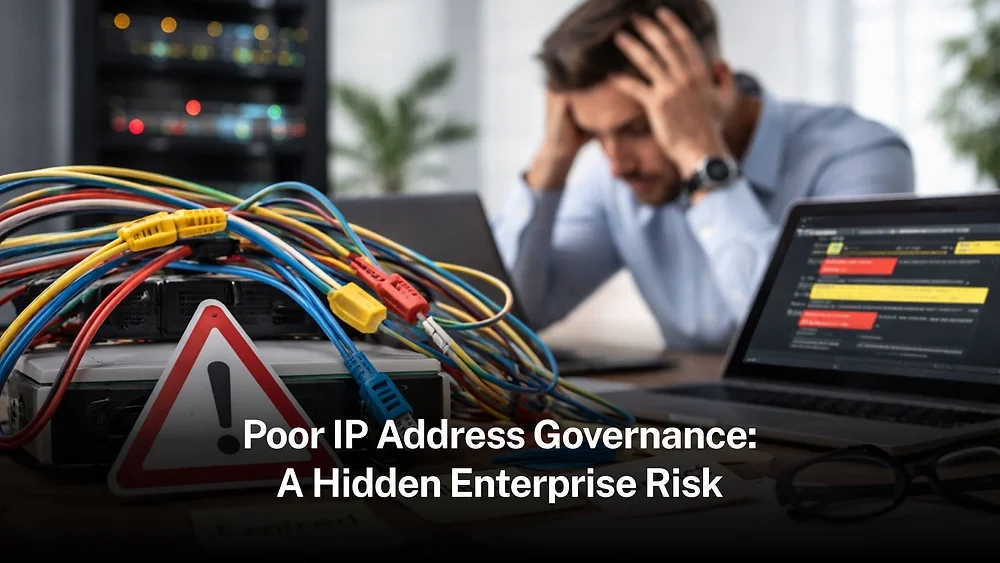
Poor IP Address Governance Risk for Enterprise
Poor IP Address Governance quietly weakens security, resilience and compliance, as enterprises lose track of number resources and routing legitimacy. • IP Address Governance failures are often invisible until crisis—when hijacks, outages, fraud or audit findings expose unmanaged IP assets and rec...
Is an IP Address an Asset or a Liability?
With IPv4 scarcity and markets emerging, organisations must balance their digital capital’s potential value against operational and reputational risks. • IPv4 addresses have increasingly behaved like scarce digital assets with quantifiable market value. • Yet they can also pose liabilities due to...

Why Diverse Voices Matter in IP Address Policy
The internet is often described as a "network of networks," but beneath the surface of every website and application lies a finite, critical resource: IP addresses. While the average user rarely thinks about the numerical labels routing their data, the policies governing how these addresses are m...
IP Address Management and Long-Term Internet Stability
Effective IP address management underpins robust, secure, scalable networks; poor stewardship undermines internet stability, resilience and equitable access for all stakeholders. • Well-structured IP address management prevents conflicts, enhances security and supports growth; it is...